Diethylcarbamazine is an anthelmintic used to treat filarial infections like Wuchereria bancrofti and Loa loa. An anthelmintic used primarily as the citrate in the treatment of filariasis, particularly infestations with Wucheria bancrofti or Loa loa.
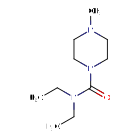
- Mechanism
- Curator reviewed
The mechanism of action of diethylcarbamazine is thought to involve sensitizing the microfilariae to phagocytosis. One study showed that diethylcarbamazine's activity against Brugia malayi microfilariae is dependent on inducible nitric-oxide synthase and the cyclooxygenase pathway. It confirmed the important role of the arachidonic acid metabolic pathway in diethylcarbamazine's mechanism of action in vivo and showes that in addition to its effects on the 5-lipoxygenase pathway, it targets the cyclooxygenase pathway and COX-1.
- Primary indication
- Used for the treatment of certain filarial diseases, including tropical pulmonary eosinophilia, loiasis, and lymphatic filariasis caused by infection with Wuchereria bancrofti, Brugia malayi, or Brugia timori.Curator reviewed · 2 structured indications
- Formula / weight
- C10H21N3O · 199.2932 g/mol (avg)
- First approval
- Canada, 1982
- Code names
- L 84 · RP-3799
Resolves to
RCKMWOKWVGPNJF-UHFFFAOYSA-NSMILESCCN(CC)C(=O)N1CCN(C)CC1What you can answer from here — as of September 23, 2026
Which drugs share a target with Diethylcarbamazine, and which of those have an active Phase 3 trial?
Create a free account or log in to explore the full data card.
Create Account